
Ursula Le Guin
The Word for World

I was so glad I caught the exhibition of Ursula Le Guin’s maps and water-colours which closed at the Architectural Association, 36, Bedford Square, London, on December 6, 2025.
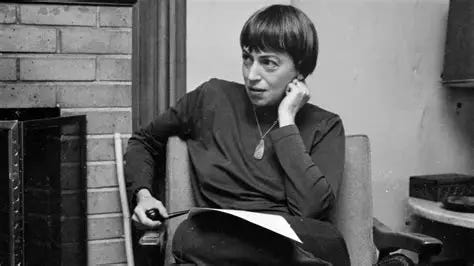
I know very little about her, and the water-colours she did of ENGLISH scenes - Hampstead Heath, or Stonehenge - were a shock. In so far as I was aware of her, I had thought of her in Portland, Oregon. For many years, the only book of hers I had read was a Puffin of The Wizard of EarthSea, and the exhibition in Bedford Square, sure enough, contained maps of the archipelago, where this remarkable tale is set - it is the story of a young goat-herd from the northern island of Gont goes to the magic island of Roke, and learns wizardry at the Academy there. (Much as I like J.K.Rowling, both as a writer and as an activist, her idea of Hogwarts is a simple - how does one say this politely, - ahem, homage to Le Guin. And , entertaining as the Harry Potter stories are, they not in the league of the Earthsea stories, which are not only mind-expandingly ingenious, but also so beautifully written as, really, to be poems in prose).
The exhibition also had Le Guin’s of dragons - the dragons in the Earthsea stories are wonderful. They speak the Old Language, only known to Mages such as Ged the Archmage (as the lad in the first of the books becomes).
The exhibition takes its title from a story which does not belong to the Earthsea group of writings, but, rather to the Hainish space stories. I was slow to get absorbed by these, because I am not immediately drawn to SciFi and I feel it is a difficult medium to pull off without being simply silly. But, of course, Le Guin does it, triumphantly. And the Hainish novels, time and again, explore some theme of great profundity and interest.
I had never even heard of the book which gives its title to the exhibition- “The Word for World is Forest” and I bought it at the Architectural Museum shop (excellent bookshop, by the way).
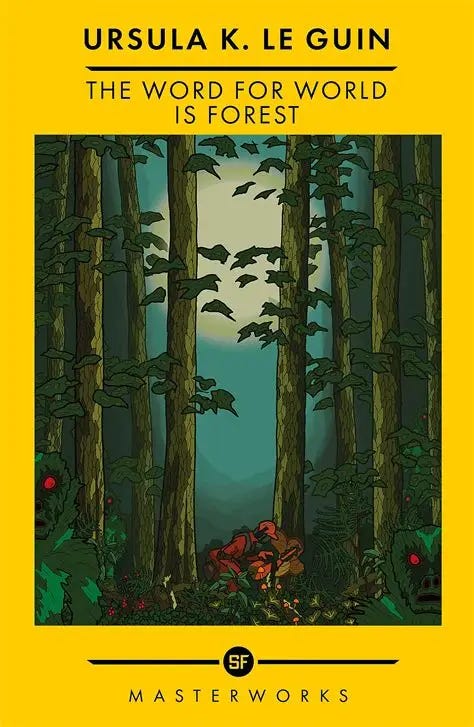
It is a novella of about 40,000, written when Le Guin was a young woman in England and published in 1972.
In order to suggest how strongly this story has effected me, - an anecdote. About thirty years ago, perhaps more, Ruth (my wife) and I went to South Carolina to stay with a dear friend, Starling Lawrence, who died this year. (He published my books in the USA). He took us to dinner at his country club near Charleston, and, as we stood around with our martinis, an old man approached and shook Star by the hand. There was some awkwardness in our host’s manner as, with his impeccable politeness, he introduced the old codger as General Westmoreland.

To Ruth, 10 years younger than me, the name meant nothing. But I had been a teenager in the late 60s. I had followed the Vietnam war. Westmoreland was the absolute bastard who
